

When you hear about self-driving cars, you might picture a vehicle cruising along with no one behind the wheel. The reality, especially in the testing phases, is a bit different. These vehicles often have a human “backup driver” ready to take control if something goes wrong. This setup raises a crucial question: What happens in a crash? Understanding backup driver Uber accident liability is essential for anyone on the road, whether you’re a pedestrian, another driver, or a passenger in one of these advanced vehicles.
The legal landscape surrounding autonomous vehicles is complex and still evolving. An accident involving a self-driving car with a human operator isn’t a simple case. It involves multiple parties, from the tech company that developed the software to the person sitting in the driver’s seat. This guide will break down the key aspects of backup driver Uber accident liability, helping you understand who is responsible when an autonomous vehicle accident occurs.
Key Takeaways
- Complex Liability: Accidents involving Uber’s self-driving cars with backup drivers involve multiple potentially liable parties, including the backup driver, Uber, and the vehicle manufacturer.
- Driver’s Role is Crucial: The backup driver’s primary duty is to monitor the vehicle and intervene when necessary. Their actions, or lack thereof, are a central focus in liability investigations.
- Insurance is Different: Standard car insurance policies may not apply. Uber’s significant commercial liability policies often come into play, but the specifics depend on the situation.
- State Laws Matter: Each state has different regulations regarding autonomous vehicles, which can significantly impact how liability is determined.
- Evidence is Key: Data from the vehicle’s onboard computers, dashcams, and the driver’s logs are vital in piecing together the moments leading up to an accident.
Understanding the Role of a Backup Driver
Before diving into the legal complexities, it’s important to understand what a backup driver actually does. These individuals are not passive passengers. They are trained operators with a critical mission: to ensure the safe operation of an autonomous vehicle during its testing phase on public roads.
A backup driver’s responsibilities typically include:
- Constant Monitoring: They must keep their hands near the steering wheel and their feet near the pedals, ready to take over manual control instantly.
- System Oversight: They watch the autonomous system’s behavior, noting any errors or unusual actions for feedback to the engineering team.
- Emergency Intervention: Their most important job is to prevent accidents by overriding the autonomous system if it fails to detect a hazard or makes a dangerous move.
Because they are actively engaged in the vehicle’s operation, their performance is a key factor in any discussion about backup driver Uber accident liability. If they were distracted or failed to intervene when a reasonable person would have, they could be found negligent.
Who is Potentially Liable in an Autonomous Uber Crash?
When an Uber self-driving car with a backup driver is involved in an accident, pointing the finger is rarely straightforward. Liability can be shared among several parties, and determining who is at fault requires a thorough investigation.
|
Potentially Liable Party |
Reason for Liability |
|---|---|
|
The Backup Driver |
Negligence, distraction, or failure to follow safety protocols. |
|
Uber (The Company) |
Inadequate training, pressure on drivers, faulty technology, or vicarious liability. |
|
The Vehicle Manufacturer |
Defects in the car’s hardware (e.g., sensors, brakes). |
|
The Software Developer |
Bugs or flaws in the self-driving software that led to the crash. |
|
Third-Party Parts Suppliers |
Failure of a specific component supplied by another company. |
This multi-layered web of responsibility is what makes backup driver Uber accident liability cases so challenging. It isn’t just about one driver’s mistake; it’s about the entire system that put the car on the road.
The Backup Driver’s Personal Responsibility
The most immediate focus after a crash is often the person in the driver’s seat. Investigators will want to know if the backup driver was paying attention. Were they looking at their phone? Were they fatigued? Did they have enough time to react?
Defining Negligence
In legal terms, negligence is the failure to exercise the level of care that a reasonably prudent person would have exercised under the same circumstances. For a backup driver, this standard is high. They are expected to be more vigilant than a typical driver because their role is specifically to watch for system failures. If it can be proven that the driver was distracted and a potential accident could have been avoided with their intervention, they may be held personally liable for the damages.
Uber’s Corporate Accountability
As the entity running the autonomous vehicle program, Uber holds significant responsibility. This is often examined through the legal doctrine of respondeat superior, which holds an employer legally responsible for the wrongful acts of an employee or agent, if such acts occur within the scope of the employment or agency.
This means if the backup driver is considered an employee and their negligence causes an accident, Uber can be held liable. Beyond this, backup driver Uber accident liability can also fall on the company for other reasons:
Inadequate Training
Did Uber provide sufficient training to its backup drivers? If the training program failed to prepare drivers for real-world hazards or did not have strict protocols for handling emergencies, the company could be seen as negligent. Proper training is fundamental to ensuring safety during the testing of such advanced technology.
Systemic Failures
Liability might also stem from the technology itself. If the self-driving software had known bugs that were not addressed, or if the sensors failed to work as advertised, the responsibility shifts from the driver to the company that developed and deployed the faulty system. The overall safety culture of the company can also be scrutinized.
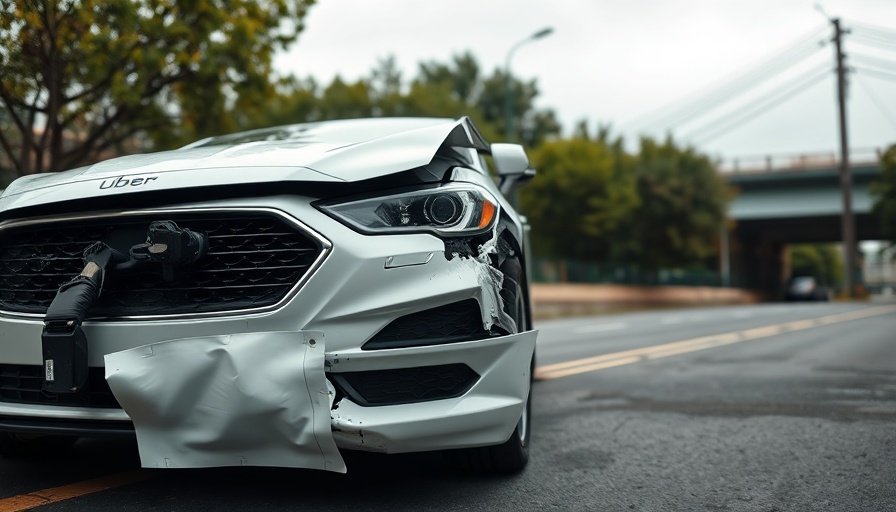
The Critical Role of Insurance Coverage
Car accidents and insurance go hand-in-hand. However, the insurance landscape for autonomous vehicles is far from standard. Your personal auto policy is not designed to cover the commercial operation of a multi-million dollar prototype vehicle.
Uber typically carries substantial commercial liability insurance policies for its operations, including its self-driving fleet. These policies are designed to cover damages in case of an accident. Following an incident, claims are generally filed against this corporate policy rather than any personal insurance the backup driver might have. The nuances of backup driver Uber accident liability are often handled by these large insurance carriers.
Uber’s Insurance Periods Explained
For its regular rideshare service, Uber’s insurance coverage operates in different phases, and similar principles can apply to its autonomous vehicle testing:
- Offline: The driver is not logged into the app. Their personal insurance is primary.
- App On, Waiting for a Request: A limited amount of liability coverage from Uber is available.
- En Route to Pick Up / During a Ride: Uber’s full $1 million liability policy is active.
For autonomous vehicle testing, the vehicle is always “on the clock,” meaning Uber’s commercial policy is almost certainly in effect. The question is less about if there is coverage and more about who the policy will ultimately hold responsible—the driver, the company, or another entity.
How Is Fault Determined in an Autonomous Accident?
Determining fault is a meticulous process that relies heavily on technology. Self-driving vehicles are equipped with a vast array of data recorders that act as an unblinking witness to an accident.
The Power of Vehicle Data
The “black box” in an autonomous car records an immense amount of information, including:
- Sensor Data: What the car’s lidar, radar, and cameras were “seeing” in the moments before the crash.
- System Status: Whether the car was in autonomous mode or under manual control.
- Driver Actions: Any inputs from the backup driver, such as turning the wheel or applying the brakes.
- Video Footage: Many test vehicles have cameras facing both inside and outside the cabin, providing a clear view of the driver’s attentiveness and the external environment.
This data is crucial for reconstructing the event. It can show whether the autonomous system made an error, if the backup driver was distracted, or if an external factor was the primary cause. A detailed analysis of this evidence is the foundation for assigning backup driver Uber accident liability. For more breaking news and analysis on technology and legal matters, you can often find insightful reports on platforms like https://itsheadline.co.uk/.
The Role of Law Enforcement and Federal Agencies
Local police are the first to respond to an accident scene, but major incidents involving autonomous vehicles often attract the attention of federal investigators. The National Transportation Safety Board (NTSB) frequently investigates crashes involving new transportation technologies.
Their investigations are incredibly thorough and aim to identify the probable cause of the accident. The NTSB’s final report can have a significant impact on legal proceedings, as it provides an expert, impartial analysis of what went wrong.
What to Do If You’re in an Accident with a Self-Driving Uber
Being in an accident with any vehicle is stressful. When that vehicle is a self-driving car, it can be even more confusing. Here are some steps to take:
- Prioritize Safety: Check for injuries and move to a safe location if possible. Call 911 to report the accident and request medical assistance.
- Gather Information: Just like any other accident, exchange information with the backup driver. Get their name, contact information, and any identifying information for the vehicle. Be sure to note that it was a self-driving test vehicle.
- Document Everything: Take photos and videos of the accident scene, including vehicle damage, positions of the cars, traffic signals, and any relevant road conditions.
- Identify Witnesses: If there are any witnesses, get their names and contact information. Their testimony could be valuable.
- Seek Medical Attention: Even if you feel fine, it’s important to get checked out by a doctor. Some injuries are not immediately apparent.
- Contact an Attorney: Due to the complexities of backup driver Uber accident liability, it is wise to consult with a personal injury attorney who has experience with rideshare or complex vehicle accident cases.
Navigating the claims process alone can be overwhelming. An experienced lawyer can help you understand your rights and ensure that all liable parties are held accountable.
The Future of Autonomous Vehicle Liability
The laws governing self-driving cars are still being written. As the technology becomes more common, states and the federal government will continue to establish clearer rules for liability. Some experts propose a “no-fault” system, where an automated vehicle’s manufacturer would be automatically responsible for any accidents, simplifying the claims process.
However, as long as a human backup driver is required to sit behind the wheel, their actions will remain a central part of the liability puzzle. The legal framework must balance the responsibility of the human operator with the accountability of the corporation deploying the technology. This ongoing debate over backup driver Uber accident liability is shaping the future of transportation. For a deeper dive into the broader topic, the concept of vicarious liability, where one party is held responsible for the actions of another, is a relevant area of study and is well-documented on platforms like Wikipedia.
Frequently Asked Questions (FAQ)
Q1: If an Uber self-driving car is in an accident, is the backup driver always at fault?
A: No, not always. While the backup driver’s actions are heavily scrutinized, liability could fall on Uber for inadequate training or faulty technology, the vehicle manufacturer for defects, or even another driver on the road. Fault is determined after a detailed investigation.
Q2: Does the backup driver use their own car insurance for an accident?
A: Generally, no. Since the driver is operating a commercial test vehicle as part of their job, Uber’s substantial commercial liability insurance policy is expected to cover damages from an accident.
Q3: What kind of evidence is used to determine fault in a backup driver Uber accident?
A: A wide range of evidence is used, but the most important is usually the data from the vehicle’s onboard computers. This includes video footage from inside and outside the car, sensor data showing what the car “saw,” and a log of whether the car was in autonomous or manual mode.
Q4: Can I sue both the backup driver and Uber after an accident?
A: Yes, it is often possible to file a claim against multiple parties. In cases of complex backup driver Uber accident liability, a lawsuit may name the backup driver for their direct negligence and Uber for its corporate responsibility, such as negligent hiring, training, or deploying a faulty system.
Q5: How are self-driving car laws different from state to state?
A: The laws vary significantly. Some states have comprehensive legislation that outlines testing requirements, insurance mandates, and liability rules for autonomous vehicles. Other states have very few laws on the books. This patchwork of regulations means the location of the accident can have a big impact on a legal case.