

Introduction
Imagine settling into your seat for a long-haul flight, expecting a routine journey across the Atlantic, only to have the experience turn into a bewildering emergency. This is exactly what happened to the passengers and crew aboard a specific British Airways flight in 2016. While air travel is statistically one of the safest ways to get around, anomalies do happen. Sometimes it’s a mechanical issue, sometimes it’s weather, and sometimes, it’s something far more mysterious that leaves experts scratching their heads for weeks. The story of british airways emergency flight ba286 falls into that latter, more puzzling category.
The incident involving this flight garnered international headlines, not because of a crash, but because of the strange symptoms reported by those on board. It serves as a fascinating case study into aviation safety, air quality inside cabins, and how airlines manage unexpected crises at 30,000 feet. Whether you are an aviation enthusiast or a nervous flyer looking for reassurance, understanding what happened helps demystify the complexities of modern air travel.
In this deep dive, we will explore the timeline of events, the immediate aftermath, the medical mystery that ensued, and the official findings. We will break down exactly what went wrong and how the industry learns from such events to keep passengers safe.
Key Takeaways:
- A detailed timeline of the british airways emergency flight ba286 incident.
- Understanding “fume events” and cabin air quality.
- How emergency diversions are handled by flight crews.
- The medical response and subsequent investigation results.
The Incident: A Routine Flight Turned Chaos
The Departure from San Francisco
On October 24, 2016, a massive Airbus A380—the world’s largest passenger airliner—prepared for departure from San Francisco International Airport (SFO). The destination was London Heathrow (LHR), a popular and busy route connecting the tech hub of the US with the capital of the UK. The flight was designated as BA286. Passengers boarded the double-decker aircraft, expecting the usual service: dinner, a few movies, perhaps some sleep, and breakfast in London.
Everything appeared normal during the initial phases of the flight. The aircraft, capable of carrying hundreds of passengers, taxied and took off without incident. For the first few hours, the cabin environment was standard. Passengers settled in, flight attendants began their service routines, and the pilots monitored the systems. There was no indication that british airways emergency flight ba286 was about to become a major news story. The transition from a calm flight to an emergency situation happened relatively quickly, catching everyone off guard.
Cruising Altitude and the First Signs of Trouble
As the aircraft reached cruising altitude and headed northeast towards Canada, the atmosphere on board began to shift dramatically. It wasn’t turbulence or a sudden drop in altitude that caused alarm; it was the physical condition of the crew. Reports indicate that flight attendants began feeling unwell almost simultaneously. The symptoms weren’t just simple fatigue or motion sickness; they were alarming and acute.
Crew members reported feeling lightheaded, dizzy, and nauseous. Some described a sense of confusion or “wooziness” that made performing their safety duties difficult. It is crucial to remember that flight attendants are trained to handle high-stress situations, so for multiple crew members to succumb to illness at the same time is highly unusual. This rapid onset of symptoms among the crew was the primary trigger that escalated the situation from a routine flight to a potential emergency. The pilots had to make a quick decision based on the deteriorating health of their team.
The Decision to Divert
Assessing the Situation in the Cockpit
The pilots of british airways emergency flight ba286 were faced with a critical decision matrix. When cabin crew members are incapacitated, it isn’t just a service issue; it is a safety issue. In the event of an emergency evacuation or a medical issue with a passenger, the cabin crew are the first responders. If they are unable to function, the safety of the entire aircraft is compromised.
Communication between the cabin service manager and the flight deck is vital. Once the pilots were informed that a significant number of the crew were unwell—and that some passengers might also be reporting symptoms—they had to consider their options. Continuing across the Atlantic Ocean to London was no longer viable. The nearest suitable airports had to be identified immediately. This decision-making process is a testament to the rigorous training pilots undergo, prioritizing human life and safety above schedule and fuel costs.
Why Vancouver was Chosen
The aircraft was flying over Canadian airspace when the emergency was declared. Vancouver International Airport (YVR) was identified as the best option for diversion. Diverting an Airbus A380 isn’t as simple as landing a small Cessna; the airport needs to have runways long enough to handle the heavy jet and facilities capable of processing hundreds of passengers and providing emergency medical support.
Vancouver fit these criteria perfectly. The pilots communicated with Air Traffic Control, declaring an emergency due to a medical situation on board involving smoke or fumes—though the exact nature was still unclear at that moment. The diversion of british airways emergency flight ba286 was executed swiftly. The plane changed course, descending from its cruising altitude and preparing for an unscheduled landing in British Columbia. This diversion likely saved the crew from further exposure to whatever was causing their illness.
On the Ground: Emergency Response at Vancouver
The Arrival of Emergency Services
When british airways emergency flight ba286 touched down in Vancouver, it was met by a massive coordinated response. Emergency vehicles, including fire trucks, ambulances, and police cars, lined the tarmac. This is standard procedure for an aircraft landing under emergency conditions, but the scale here was larger due to the number of people reported ill.
The aircraft taxied to a remote stand rather than a gate, allowing emergency crews to access the plane immediately without entering the busy terminal. Paramedics boarded the aircraft to triage patients. It was a chaotic scene, with weary travelers confused about why they were in Canada and concerned about the health of the crew. The priority was to assess everyone’s vitals, check for signs of toxicity (like carbon monoxide poisoning), and determine who needed hospital care.
Hospitalization of Crew and Passengers
The medical toll of the incident was significant. In total, 25 crew members and two passengers were transported to local hospitals in the Vancouver area. This large number of hospitalizations underscores the severity of the symptoms experienced on board. It wasn’t just one or two people feeling sick; it was a mass casualty event in terms of medical response, even if the injuries weren’t traumatic physical wounds.
The passengers and crew were treated for smoke inhalation-type symptoms, although early reports were conflicting about whether there was visible smoke in the cabin. All patients were eventually discharged from the hospital, which was a relief, but it deepened the mystery. If it wasn’t a fire, and everyone recovered quickly once off the plane, what exactly had happened on british airways emergency flight ba286?
What Caused the Sickness? Investigating the Theories
The “Fume Event” Theory
The most prevalent theory surrounding british airways emergency flight ba286 is that it was a “fume event.” This occurs when bleed air—compressed air taken from the aircraft engines to pressurize and heat the cabin—gets contaminated. Engine seals can sometimes leak oil or hydraulic fluid into this hot air stream. When these fluids are heated, they can release toxic compounds, including organophosphates, into the cabin air supply.
Symptoms of a fume event align closely with what was reported:
- Dizziness
- Nausea
- Eye and throat irritation
- Confusion
While airlines and manufacturers maintain that cabin air is safe, pilot and cabin crew unions have long argued that fume events are a genuine occupational hazard. The smell associated with these events is often described as resembling “dirty socks” or “wet dog.”
Hypoxia and Pressurization Issues
Another angle investigators looked into was a pressurization issue leading to hypoxia (lack of oxygen). If the cabin altitude rises too high, passengers and crew can suffer from hypoxia, which causes confusion, euphoria, dizziness, and eventually unconsciousness.
However, usually, if cabin pressure drops, oxygen masks deploy automatically. In the case of british airways emergency flight ba286, the masks did not deploy, suggesting the cabin pressure remained within normal operational limits. Still, slow leaks or faulty sensors are always considered during such investigations. The investigation would involve checking the aircraft’s “black boxes” and maintenance logs to see if the pressurization system recorded any anomalies during the flight.
Table: Comparison of Potential Causes
|
Potential Cause |
Description |
Symptoms Matches? |
Likelihood |
|---|---|---|---|
|
Fume Event |
Oil/hydraulic fluid leaking into cabin air supply. |
Yes (Dizziness, nausea, irritation) |
High |
|
Hypoxia |
Lack of oxygen due to pressurization failure. |
Partial (Confusion, dizziness) |
Low (No masks deployed) |
|
Food Poisoning |
Contaminated crew meals. |
Partial (Nausea) |
Low (Affected too many too fast) |
|
Psychogenic Illness |
Mass hysteria triggered by a smell or one person fainting. |
Yes (Spread of symptoms) |
Low (Doesn’t explain physical irritation) |
The Official Findings and Statements
British Airways’ Response
Following the diversion of british airways emergency flight ba286, British Airways released statements emphasizing their commitment to safety. They confirmed the diversion was due to crew members feeling unwell but were initially vague about the specific cause. This is common in aviation investigations; airlines rarely speculate before maintenance teams inspect the aircraft.
Later, reports surfaced that British Airways engineers inspected the aircraft in Vancouver and found no technical faults that would explain the symptoms. This “no fault found” result is frustratingly common in reported fume events. Without a smoking gun, like a broken seal dripping oil, it becomes difficult to definitively prove what happened. The airline focused on re-accommodating passengers and ensuring the crew received medical attention and rest.
Regulatory Investigations
Aviation safety bodies often review such incidents. In this case, the lack of a definitive mechanical failure meant the incident remains somewhat ambiguous in the public record. However, these events contribute to the broader ongoing study of cabin air quality.
The Civil Aviation Authority (CAA) and other bodies monitor these reports. While no specific directive was issued solely because of british airways emergency flight ba286, the data point was added to the growing file on cabin air quality incidents. It highlighted the need for better sensors on aircraft that can detect chemical contaminants in real-time, something that is currently not standard on most commercial airliners.
Understanding the Airbus A380
A Marvel of Engineering
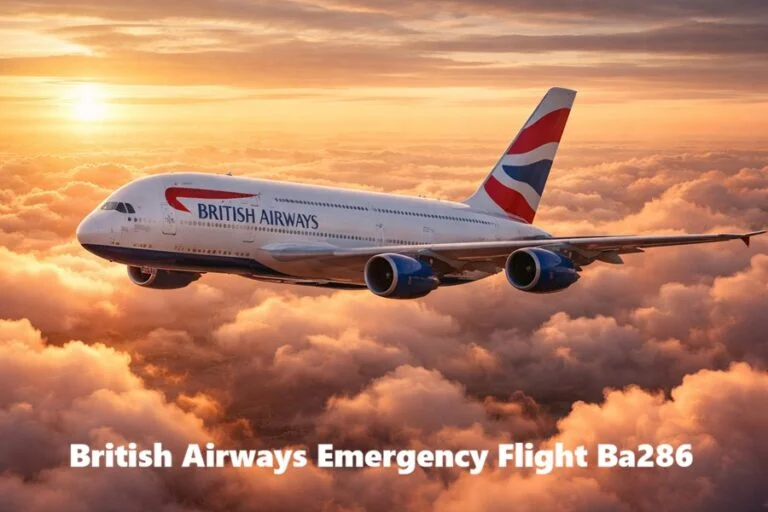
To understand the context, we must look at the vessel itself. The Airbus A380 is a double-deck, wide-body, four-engine jet airliner. It is a marvel of modern engineering, designed for comfort and quietness. It has an advanced air circulation system equipped with High-Efficiency Particulate Air (HEPA) filters.
These filters are excellent at removing bacteria and viruses (like COVID-19 or flu), essentially scrubbing the air of biological contaminants. However, standard HEPA filters do not filter out gases or chemical vapors. If oil fumes enter the air conditioning packs, the filters won’t stop them. This distinction is crucial when analyzing incidents like british airways emergency flight ba286.
Safety Features of the A380
- Redundancy: The A380 has multiple air conditioning packs. If one fails or is contaminated, pilots can theoretically isolate it and use the others.
- Monitoring: The cockpit is equipped with advanced Ecam (Electronic Centralised Aircraft Monitor) systems that alert pilots to system failures.
- Air Exchange: The total cabin air is changed every two to three minutes.
Despite these advanced features, the reliance on “bleed air” (except for the Boeing 787 Dreamliner, which uses a different system) means the potential for contamination exists on almost all jetliners, including the A380.
The Impact on Passengers
Chaos and Confusion
For the hundreds of passengers on british airways emergency flight ba286, the experience was unsettling. Many were asleep when the commotion began. Seeing flight attendants—the figures of authority and safety—falling ill is deeply disturbing. Reports from passengers interviewed after the landing described a scene where crew members were sitting on the floor or needing oxygen.
Upon landing in Vancouver, the logistical nightmare began. Passengers were stranded without their checked luggage for some time, as the plane was a crime scene of sorts (investigatively speaking). They had to be rebooked on other flights, put up in hotels, and generally managed by ground staff who were also reacting to an emergency.
Compensation and Customer Service
In situations like the diversion of british airways emergency flight ba286, airlines typically cover hotel accommodation, meals, and rebooking costs. Under EU regulation EC 261/2004, passengers might also be entitled to compensation for delays, although “extraordinary circumstances” (like hidden manufacturing defects or medical emergencies) can sometimes exempt airlines from paying cash compensation.
British Airways worked to get passengers to their final destination of London, but the delay was significant. The incident serves as a reminder to always travel with essential items (medication, change of clothes) in your carry-on, just in case you get separated from your checked bags during a diversion.
Broader Implications for Aviation Safety
The “Aerotoxic Syndrome” Debate
The british airways emergency flight ba286 incident added fuel to the fire regarding the debate on “Aerotoxic Syndrome.” This is a term used by campaigners to describe the long-term ill health effects caused by breathing contaminated cabin air. While the aviation industry and some medical studies suggest there is no conclusive evidence linking cabin air to long-term neurological damage, many crew members disagree.
Campaign groups use events like BA286 to lobby for:
- Air Quality Sensors: Installing sensors to detect oil fumes.
- Filter Upgrades: Using charcoal filters that can scrub volatile organic compounds (VOCs).
- Design Changes: Moving away from bleed air systems in future aircraft designs.
Changes in Protocols
Airlines take every medical diversion seriously. Following events like british airways emergency flight ba286, airlines often review their “Smoke, Fire, and Fumes” checklists. Training for pilots and cabin crew is updated to ensure they recognize symptoms early.
Communication protocols are also reviewed. The ability of the pilot to quickly assess the cabin crew’s incapacitation level and declare an emergency is critical. The swift action taken by the pilots of BA286 undoubtedly prevented the situation from becoming worse, ensuring that those affected received hospital care within hours.
Tips for Passengers During In-Flight Emergencies
If you ever find yourself on a flight that declares an emergency, like british airways emergency flight ba286, here is what you should do:
- Stay Calm: Panic is contagious and dangerous. Listen to the crew.
- Follow Instructions: Even if the crew is unwell, they are trained for this. If they are incapacitated, follow the pilot’s instructions over the PA.
- Report Symptoms: If you smell something odd (dirty socks, burning oil) or feel dizzy, tell a crew member immediately.
- Keep Your Seatbelt Fastened: In case of a rapid descent, you need to be secured.
- Be Patient: Once on the ground, emergency services take priority. You may be kept on the plane for a while.
Frequently Asked Questions (FAQ)
What exactly happened on British Airways flight BA286?
British airways emergency flight ba286 was a scheduled flight from San Francisco to London in October 2016. It diverted to Vancouver after cabin crew members and some passengers became unwell due to suspected fume inhalation.
Did the plane crash?
No, the plane did not crash. The pilots performed a safe emergency landing at Vancouver International Airport.
What was the cause of the illness?
The official cause remains debated, but it is widely suspected to be a “fume event,” where oil or hydraulic fluid fumes entered the cabin air supply. However, official inspections often return “no fault found.”
Is the Airbus A380 safe?
Yes, the Airbus A380 is statistically very safe. Incidents like this are rare anomalies relative to the millions of miles these aircraft fly safely every year.
Were the passengers compensated?
Passengers were provided with hotels and rebooking. Whether they received statutory cash compensation depends on the specific ruling regarding “extraordinary circumstances” for that specific flight.
How many people were hospitalized?
A total of 25 crew members and two passengers were taken to hospitals in Vancouver for checks and treatment. All were subsequently discharged.
Conclusion
The story of british airways emergency flight ba286 remains a compelling chapter in recent aviation history. It highlights the vulnerability of the complex systems that keep us comfortable at 30,000 feet and the swift, professional reactions of flight crews when things go wrong. While the definitive “smoking gun” regarding the cause of the sickness may never be universally agreed upon, the incident serves as a critical data point for improving air quality and safety standards.
For the traveler, it is a reminder that while air travel is incredibly safe, being prepared for the unexpected is always wise. The next time you board a plane, you can appreciate the intricate dance of engineering and human skill that gets you to your destination. For more updates on travel news and aviation insights, you can visit https://itsheadline.co.uk/. As we continue to push the boundaries of flight, learning from events like the british airways emergency flight ba286 ensures that the skies remain safe for everyone.
To read more about the general safety and history of the airline involved, you can check this resource on British Airways.